

Gold Down 20%, What Should Investors Do?
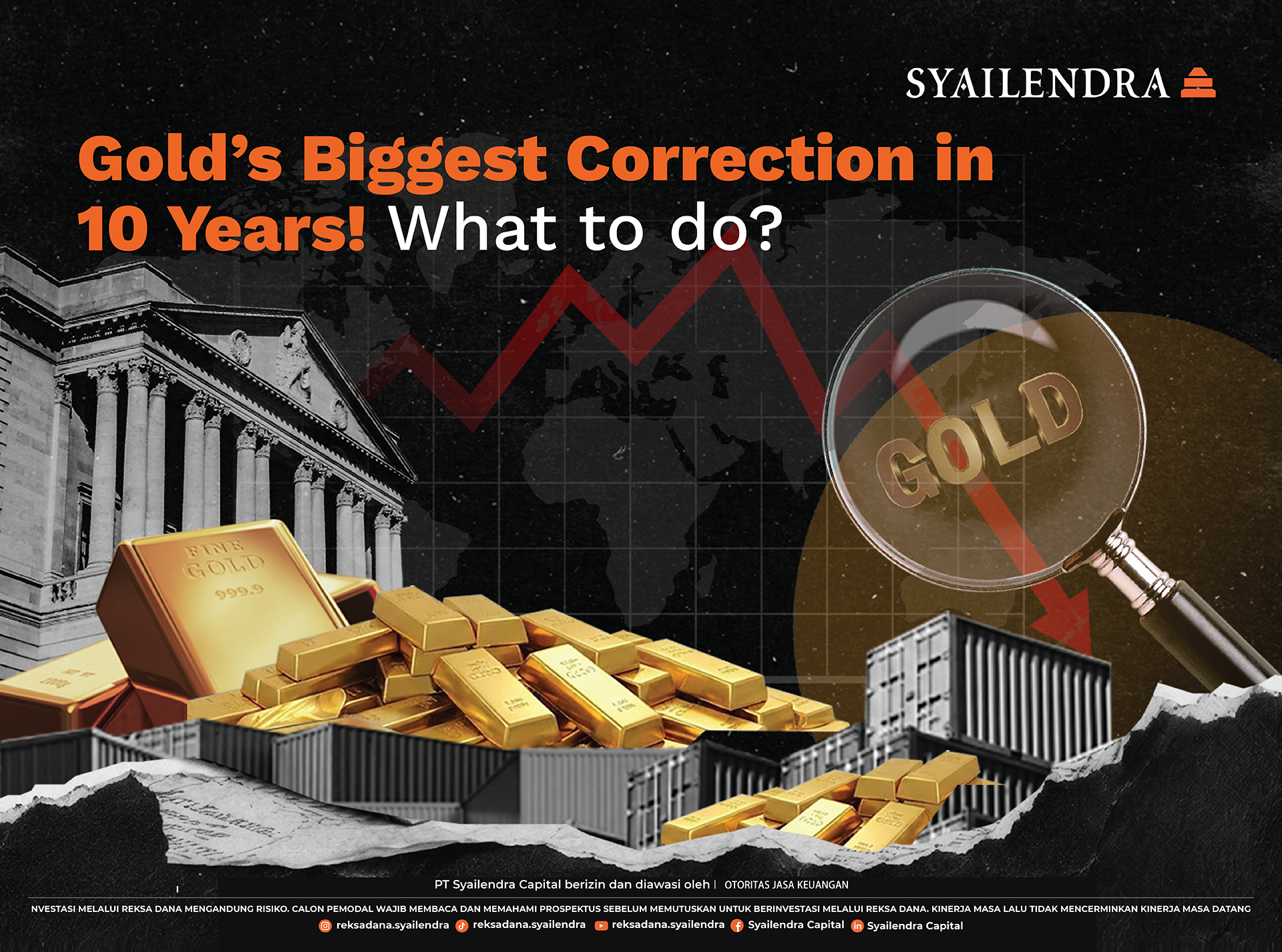
Gold prices have corrected by approximately 20% throughout 2026, making it the deepest decline in the past decade.
From 2016 to 2025, gold experienced four correction periods with declines ranging from around 6% to 18%. The average correction reached 11.5%.
This means the current correction is indeed larger compared to previous historical patterns. However, price declines are not uncommon in gold's long-term journey.
Correction Following Strong Rally
Gold prices have posted significant gains in recent years. When prices move too quickly, profit-taking and valuation normalisation become natural occurrences.
A correction also does not necessarily mean that gold's function as a diversification asset has changed. In a portfolio, gold continues to serve as:
- A balance when risk assets come under pressure
- Protection against economic uncertainty
- A diversifier from equities and bonds
- A hedge against currency weakness
Therefore, investors need to distinguish between short-term price weakness and long-term fundamental changes.
What Does It Mean for Investors?
Price declines can offer a more attractive entry point compared to when gold was at its peak.
However, a 20% price drop does not automatically mean the bottom has been reached. The correction can continue and the recovery process may take time.
A gradual approach can be a more measured option. Investors do not need to guess the lowest point, but can build exposure according to their risk profile and financial objectives.
Ultimately, the question for investors is not just:

Follow Us on:


PT Syailendra Capital is licensed and supervised by the Indonesia Financial Services Authority (OJK)