

Global Uncertainty Until 2027: What Does It Mean for Mutual Fund Investors?
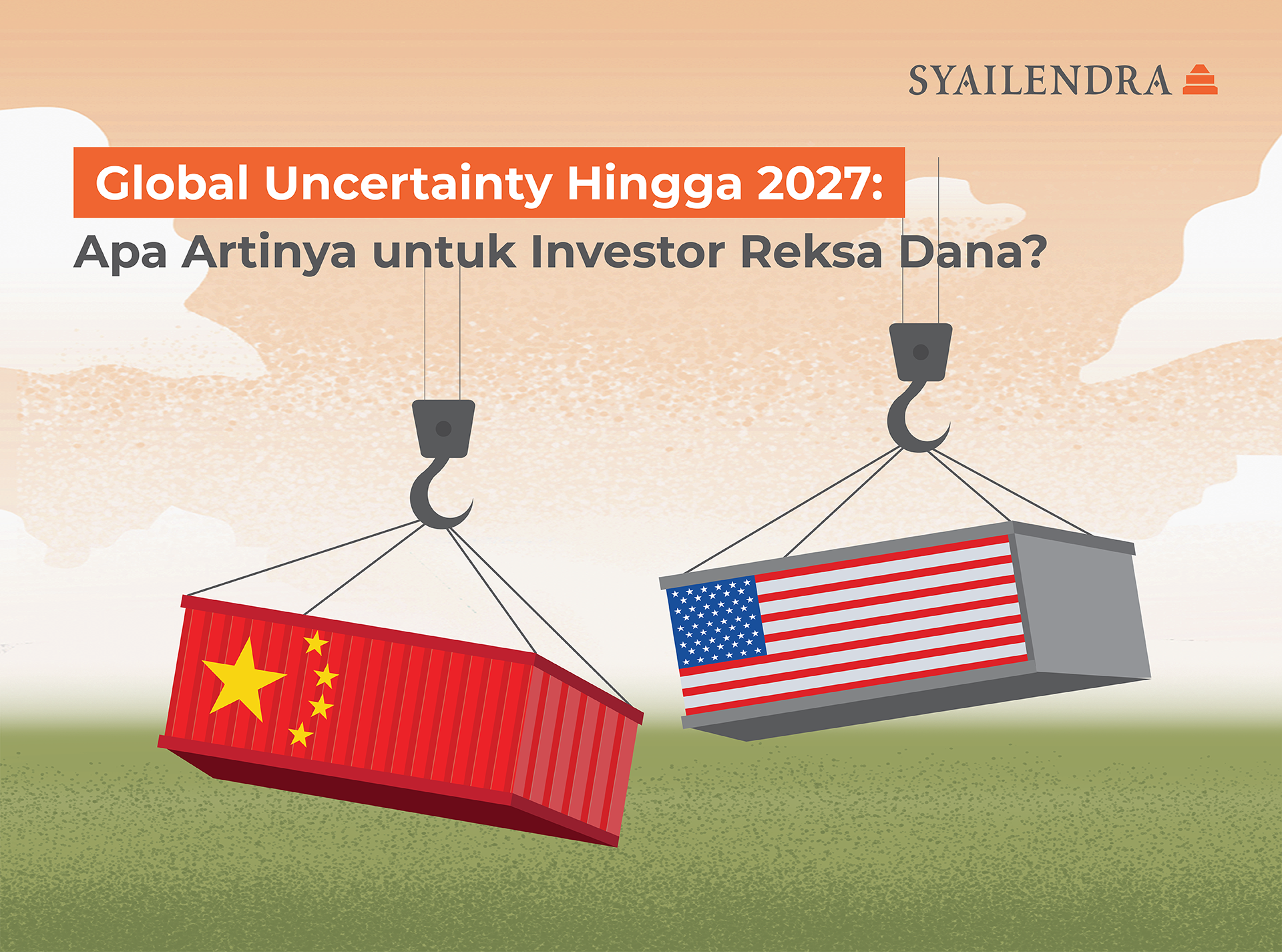
Bank Indonesia has reiterated that global conditions are expected to remain challenging through 2026–2027. From geopolitics to economic slowdown and new financial risks—all are shaping a demanding landscape.
But as always, an investor's task is not to predict the future…
but to prepare a portfolio that can withstand any scenario.
Below is a summary and interpretation from the perspective of Syailendra Capital investors.
1. The Tug-of-War Between Geopolitics & US Tariffs
BI highlights that US tariffs and protectionism are increasingly fragmenting global supply chains. The world is gradually dividing into new "economic blocs," driving up trade costs and weakening global growth.
What's the impact on investors?
- Higher volatility in global equity markets.
- IHSG movements more sensitive to foreign capital flows.
- Export-oriented sectors could be more volatile.
Strategy: Diversification across asset classes (equities–fixed income–money market) becomes increasingly important, rather than relying on a single return source.
2. Global Growth Slowing, but Indonesia Relatively Resilient
BI forecasts the US and China to slow, while India, the EU, and Indonesia remain relatively solid.
Good news for domestic investors:
Indonesia still relies on strong domestic consumption and rising investment in manufacturing and downstream industries.
Implications for mutual funds:
- Medium-term opportunities in Indonesian equities remain attractive.
- Bond momentum could emerge as interest rate cuts loom.
- Balanced funds and fixed income funds could deliver stability amid global dynamics.
3. Developed Country Debt Surging: Risk of Contagion to Emerging Markets
Debt levels in the US, Japan, and Europe are at elevated levels, while their interest rates remain relatively tight.
This typically triggers two things:
- Capital flows returning to developed markets (flight to safety)
- Pressure on emerging market currencies, including the Rupiah
What it means for investors:
Markets may be volatile, but that's no reason to panic. During such phases, regular contributions via dollar-cost averaging (DCA) often become the most effective strategy for smoothing average costs.
4. From Hedge Funds to Risky Derivatives: New Risks Emerging
BI highlights increased activity in high-risk derivatives across global hedge funds. Technical risks like this can trigger sudden capital outflows, even when Indonesia's fundamentals remain sound.
This is why:
- BI continues to safeguard Rupiah stability
- The government focuses on maintaining investor confidence
- Retail investors are advised to maintain a healthy proportion of safe assets such as Money Market Funds or fixed income instruments
5. Crypto & Stablecoins Still Poorly Regulated -> The CBDC Era Drawing Near?
Perry Warjiyo has reaffirmed that minimal regulation in digital assets could pose systemic risks globally.
As a result, BI is increasingly promoting Central Bank Digital Currency (CBDC) development as a safe and standardised digital payment instrument.
So, What Should Investors Do?
- Strengthen stable assets
Fixed income or money market instruments can anchor your portfolio when equity markets are turbulent.
- Stay exposed to growth
Equity funds remain relevant for long-term objectives, as Indonesia is still among the region's economies with the best prospects.
- Continue with DCA
Markets may rise and fall, but regular contributions will work in your favour.
- Stick to sound diversification principles
Not just mixing things together, but building a portfolio with clear roles: stability, growth, and liquidity.

Follow Us on:


PT Syailendra Capital is licensed and supervised by the Indonesia Financial Services Authority (OJK)