

How Bonds Quietly Rule Everything
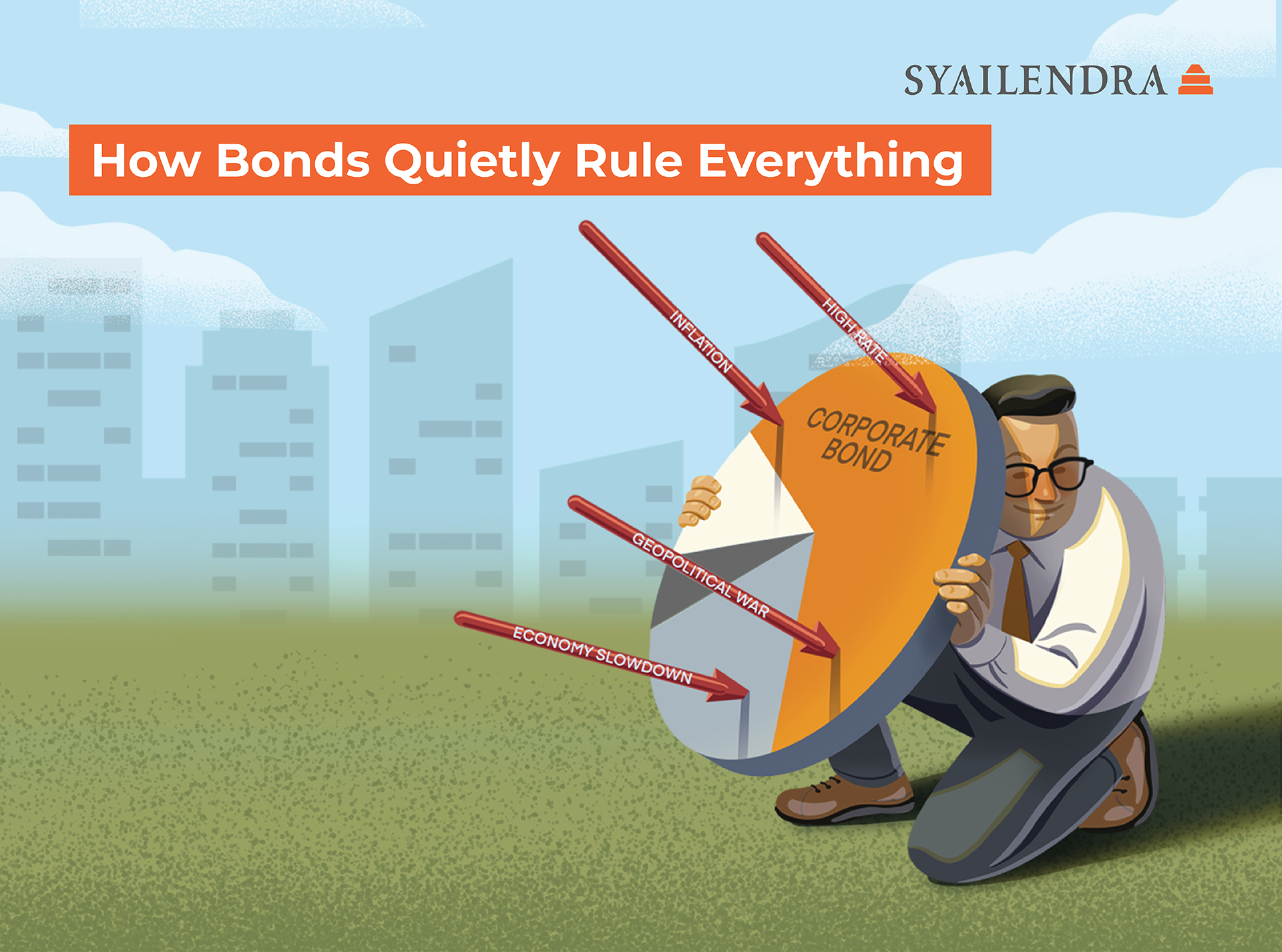
Whilst the majority of retail investors are busy chasing stocks, professionals – from fund managers, central banks, to hedge funds – are paying far greater attention to the bond market.
Why? Because bonds not only reflect economic conditions, but often predict the future.
The bond market is absolutely massive
Did you know that the global bond market value currently stands at more than $138 trillion? Larger than the global stock market.

- Determines the cost of borrowing for countries and corporations.
- Influences interest rate policy from central banks.
- Forms the basis for valuation calculations across virtually all assets, including stocks and property.
For example: when bond yields rise, stock values tend to fall because the discount rate used to calculate valuations also rises.
Bonds vs Stocks: Two Different Worlds
Buying a stock means you own a portion of a company. But buying a bond means you are lending money to a company or government, and they are obliged to pay interest (coupon) and the principal (principal) according to schedule.

Bonds tend to provide fixed income regularly, unlike stocks where returns are more speculative and depend on capital gains.
Bond Yields Rise = Stocks Fall?
This is not a myth. In theory, when bond yields rise (because bond prices fall), stock valuations come under pressure. Why? Because in valuation models such as discounted cash flow, an increase in yield raises the required return, making the present value of future earnings lower.
That's why the stock market often "trembles" when the 10Y UST or 10Y SUN yields surge.
Yield Curve = A Map of Economic Direction
The yield curve shows the relationship between maturity and government bond yields. Under normal conditions, the curve slopes upward, meaning the longer the maturity, the higher the yield.
But when the curve inverts (inverted yield curve) – where short-term bonds have higher yields than long-term bonds – it often signals recession. In the US, nearly all recessions over the past 50 years have been preceded by an inverted yield curve.

Why Is This Important for Mutual Fund Investors?
Bonds are not just an investment tool, but also a mirror of the macroeconomy. They reveal:
- Inflation expectations
- Economic growth projections
- The direction of central bank policy
- The level of confidence in governments and corporations
The bond market is also where monetary policy transmission occurs. When central banks raise interest rates, the impact does not directly affect all sectors. But through the bond market, the effect spreads: from borrowing costs, exchange rates, to corporate investment decisions.
In conclusion?
Bonds may not be as "glamorous" as stocks. But that's precisely their strength: calm, yet their influence remains crucial. Bonds are the operating system of the entire financial market. And anyone who wants to understand how the financial world really works should better start from here.

Follow Us on:


PT Syailendra Capital is licensed and supervised by the Indonesia Financial Services Authority (OJK)