

Indonesia's Forex Reserves Ease as BI Prioritizes Rupiah Stability
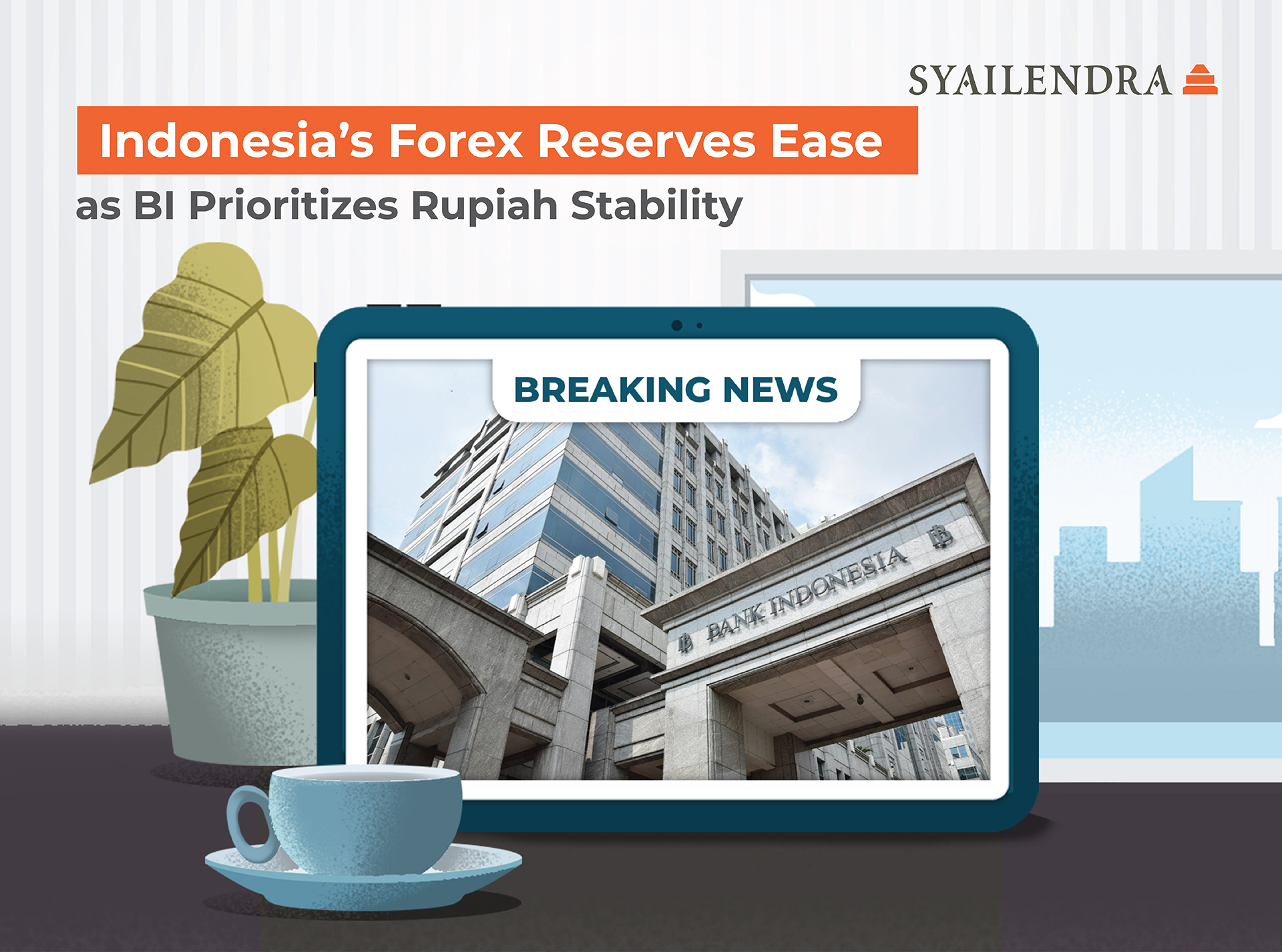
Indonesia's forex reserves declined throughout 2025, falling from US$155.7 billion in December 2024 to US$148.7 billion in September 2025, before recovering slightly to US$149.9 billion in October.
Bank Indonesia (BI) explained that this movement reflects efforts to stabilize the Rupiah amid heightened global volatility.
Rupiah Stabilization: BI Relies on Measured Intervention
Governor Perry Warjiyo affirmed that the decline in forex reserves primarily stemmed from a series of BI interventions, including:
- Interventions in the NDF market (offshore) and DNDF (onshore)
- Limited action in the spot market
This approach was chosen to smooth short-term pressure on the Rupiah without aggressively depleting reserves.
In other words, BI seeks to maintain a stable and orderly exchange rate, rather than target a specific level.
Global Pressures Drive Capital Outflows
Since the start of the year, global uncertainty — ranging from a strong US dollar to turbulence in global bond markets — has triggered outflows of foreign investors from various domestic instruments:
- Equities
- State Securities (SBN)
- BI Rupiah Securities (SRBI)
Nevertheless, BI noted selective inflows returning to SBN, supported by attractive returns and Indonesia's relatively stable risk perception.
Market Implications: Maintaining a Delicate Balance
The decline in forex reserves throughout 2025 demonstrates a monetary policy trade-off: ensuring rupiah stability without excessively depleting reserves.
The rise in reserves to US$149.9 billion in October signalled that market pressure was beginning to ease and BI's intervention strategy was starting to yield results.
This situation also reflects BI's prudent approach — preserving policy flexibility amid a global market highly sensitive to US policy and the direction of global bond yields.
Conclusion
The movement in forex reserves in 2025 reflects normal dynamics in the coordination of exchange rate stabilization policy.
Although reserves were temporarily eroded, BI's measured response helped keep the Rupiah stable amid global capital outflows.
With external pressures beginning to ease towards year-end, Indonesia has the opportunity to maintain macroeconomic stability heading into 2026.

Follow Us on:


PT Syailendra Capital is licensed and supervised by the Indonesia Financial Services Authority (OJK)