

Why BI Is Waiting Before Cutting Rates
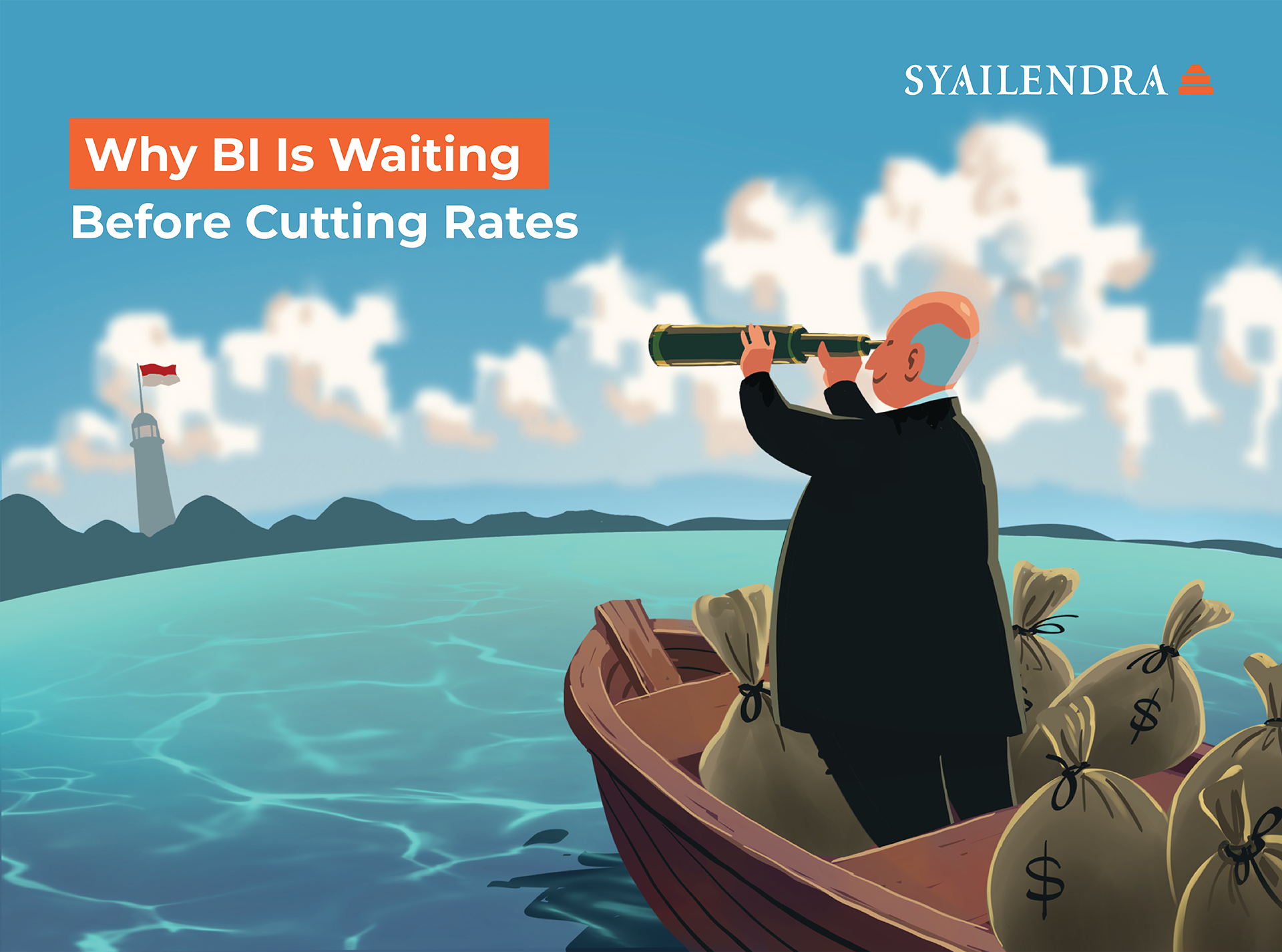
Bank Indonesia (BI) has decided to hold the BI Rate at 4.75% in February 2026, a move that reflects a cautious policy approach amid currency pressure and ongoing external dynamics.
Although the Rupiah has faced pressure in recent times, BI believes that the current exchange rate is below its fair value (undervalued). At the same time, prospects for domestic economic activity are still viewed as reasonably solid for early 2026.
Rupiah Stability as the Top Priority
The decision to hold interest rates demonstrates that external stability remains the main focus of monetary policy.
Several factors limiting the scope for interest rate cuts in the near term include:
- Risk of outflows from the bond market
- Seasonal foreign exchange demand at the start of the year
- Elevated global volatility
Therefore, although the monetary policy direction still leans towards easing, interest rate cuts are estimated to be more likely to occur in the second half of 2026.
Overall, most consensus still maintains a projection of interest rate cuts of 50 basis points throughout 2026, but this is likely to occur gradually in 2H26.
Household Consumption Expected to Remain Strong
On the economic growth side, BI believes economic activity in 1Q26 will remain solid.
Several key supporting factors include:
1. Seasonal Mobility
Religious holiday periods typically increase population mobility and drive consumption activity.
2. New Fiscal Stimulus
Government stimulus programmes are expected to help maintain purchasing power.
3. Accommodative Monetary Policy
Domestic liquidity remains adequately maintained to support economic activity.
4. Implementation of Government Programmes
Several strategic programmes such as:
- Free Nutritious Meals
- KDMP
are expected to also drive household consumption.
The combination of these factors explains why domestic demand is still viewed as relatively resilient.
Current Account Returns to Deficit
On the external side, the latest data shows that Indonesia's current account has returned to a deficit in 4Q25.
The current account recorded -US$2.5 billion or approximately -0.7% of GDP.
The main causes of this change are:
- Increased imports
- Decline in merchandise trade surplus
Import surges often reflect increased domestic economic activity, but in the short term can pressure the external balance.
Financial Account Strengthens Again
Despite the weakening current account, the financial account has actually recorded a surplus.
The financial account recorded +US$8.2 billion, supported by:
- Net portfolio investment inflow of +US$4.6 billion
This shows that global investor interest in Indonesian assets remains relatively intact, despite elevated global volatility.
The current moment demonstrates the balance being maintained by Indonesia's economic policy.
On one hand, domestic growth remains reasonably strong, supported by consumption and policy stimulus.
On the other hand, external stability remains a concern, particularly amid global volatility and capital flow dynamics.
In this context, BI's decision to hold interest rates reflects a measured wait-and-see approach, while preserving policy room going forward.

Follow Us on:


PT Syailendra Capital is licensed and supervised by the Indonesia Financial Services Authority (OJK)