

Passive Funds: The Difference Between ETFs and Non-ETFs
 May 05, 2020
Broadly speaking, Mutual Funds can also be divided into two categories: active Mutual Funds and passive Mutual Funds. Active Mutual Funds mean the investment strategy and selection of securities are carried out by the Fund Manager while considering top-down and bottom-up analysis. Meanwhile, passive Mutual Funds, also known as Index Funds, are Mutual Funds managed to achieve investment returns that mirror a particular index used as a benchmark, whether it be a bond index or equity index.
Given the performance of most Mutual Funds today, passive Mutual Funds are predicted to become the next rising star in the future. Based on data, only 31.83% of Indonesian Equity Funds managed to outperform the IHSG in 2019. This trend has been evident since 2010, when actively managed Mutual Funds underperformed compared to the IHSG.
ETFs themselves are a part of Index Funds. What distinguishes ETFs from Index Funds is that sales can be executed at any time without having to wait for the NAV to be published. The price of an ETF changes continuously every minute, allowing investors to sell depending on their preferred price preference. ETF-based Mutual Funds offer better tracking error. With the transparency of price over time, investors can monitor tracking error more transparently and can therefore determine the best timing to make their own purchases or sales.
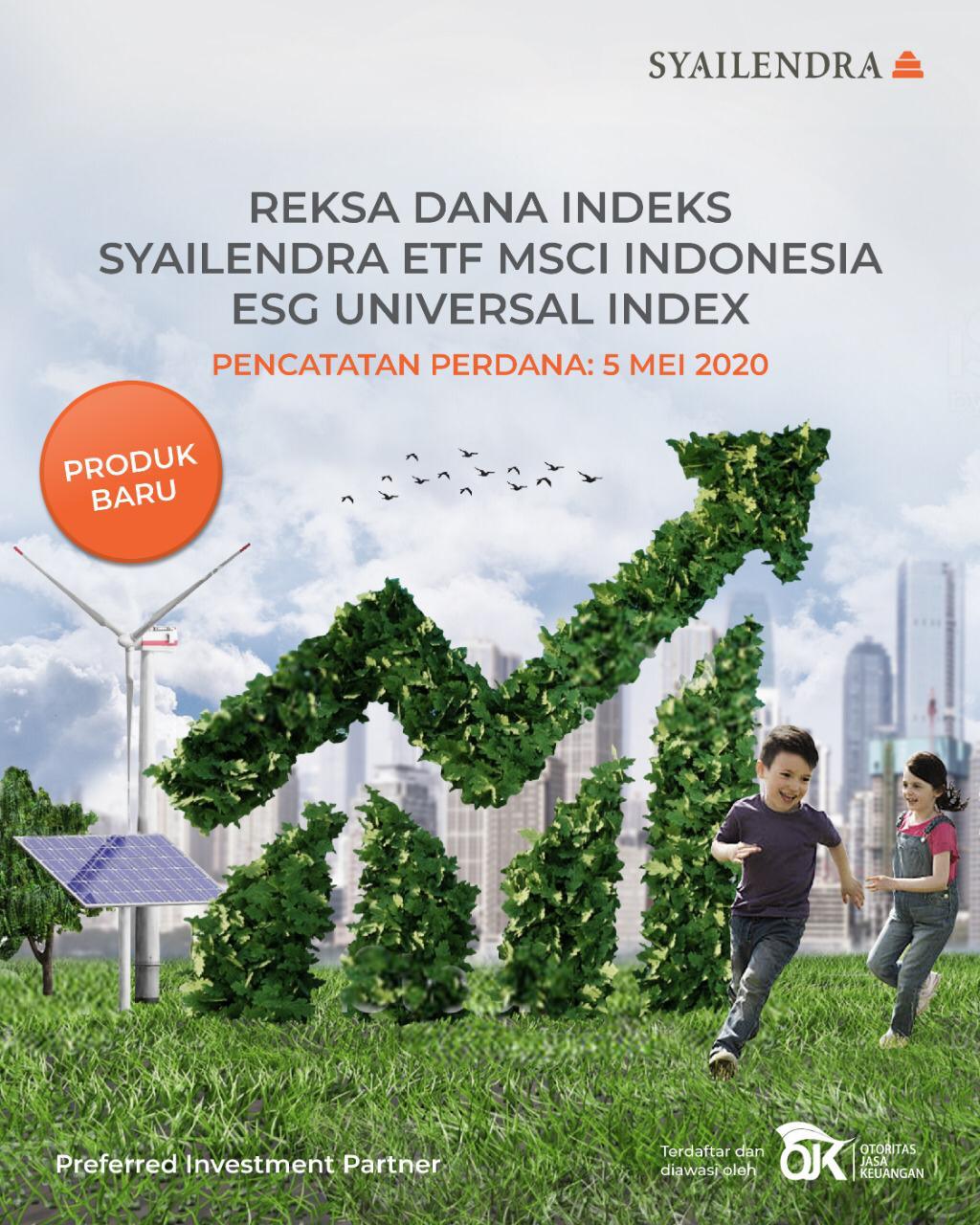
This type of investment is also increasingly favoured globally. Global data shows an average increase of 35.39% from December 2014 to December 2019. This is certainly higher than the industry CAGR, which stood at 17.56% during the same period. As of December 2019, 38 ETF Mutual Funds have been recorded on the Indonesia Stock Exchange with total assets under management of Rp 14.2 billion. ETF regulations have also been regulated by POJK number 49 of 2015. Interested in trying it out? Syailendra now offers the Syailendra ETF MSCI Indonesia ESG Universal Index.
Read also:

Follow Us on:


PT Syailendra Capital is licensed and supervised by the Indonesia Financial Services Authority (OJK)