

When Gold Demand Exceeds Production
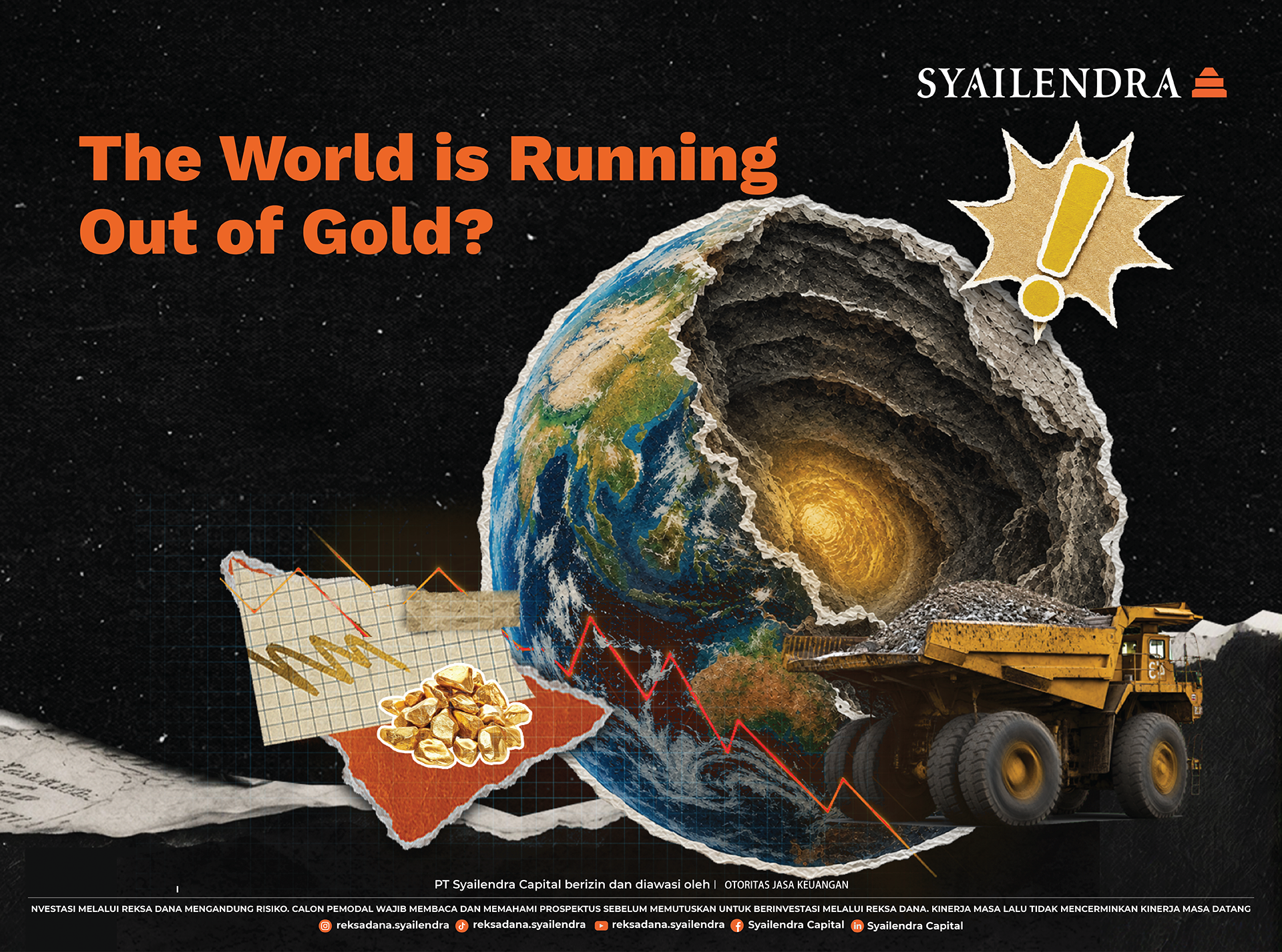
Gold possesses a characteristic that is difficult to find in many other assets. Its demand continues to hold strong, while its supply cannot be easily increased.
By the end of 2024, the total amount of gold ever mined throughout history is estimated to reach 216,265 tonnes. If all of it were gathered together, its volume would be illustratively equivalent to only around four Olympic-sized swimming pools.
That amount appears large. However, global gold demand in 2025 has already exceeded 5,000 tonnes. Simply put, all the gold ever mined would only be equivalent to around 42 years of global demand if there were no new production or recycling.
This scarcity can be observed through the stock-to-flow ratio, which is the comparison between total available stock and new production each year.
Gold has a ratio of approximately 60, compared to silver at around 22 and platinum at around 1. This means it would take decades of production to match the amount of gold already above ground.
New Supply Struggles to Keep Up
The problem is that mining production cannot increase quickly simply because demand or prices rise.
Developing new mines requires exploration, significant capital, licensing, and considerable time. Over the past decade, gold production has grown by less than 1% per year.
Meanwhile, the gap between demand and production continues to widen. In 2021, that gap reached approximately 460 tonnes. By 2025, the figure has increased to around 1,330 tonnes.
This supply shortage is not entirely filled by new production, but rather through the recycling of jewellery and old gold. In other words, the market is increasingly dependent on existing gold stock.
This situation does not necessarily mean gold prices will always rise. In the short term, gold remains influenced by interest rates, the US dollar, and changes in investor sentiment.
However, supply limitations give gold a different foundation. When production struggles to keep pace with demand, scarcity becomes part of its long-term value.
This is why gold continues to be accumulated by central banks, institutions, and investors across various countries.
The question is, does your portfolio already have exposure to an asset whose supply is becoming increasingly difficult to increase?
Source: World Gold Council, Metals Focus, Wessex Mint, and Business Standard.

Follow Us on:


PT Syailendra Capital is licensed and supervised by the Indonesia Financial Services Authority (OJK)